

How to handle the paper avalanche—especially when you're outnumbered
|
|
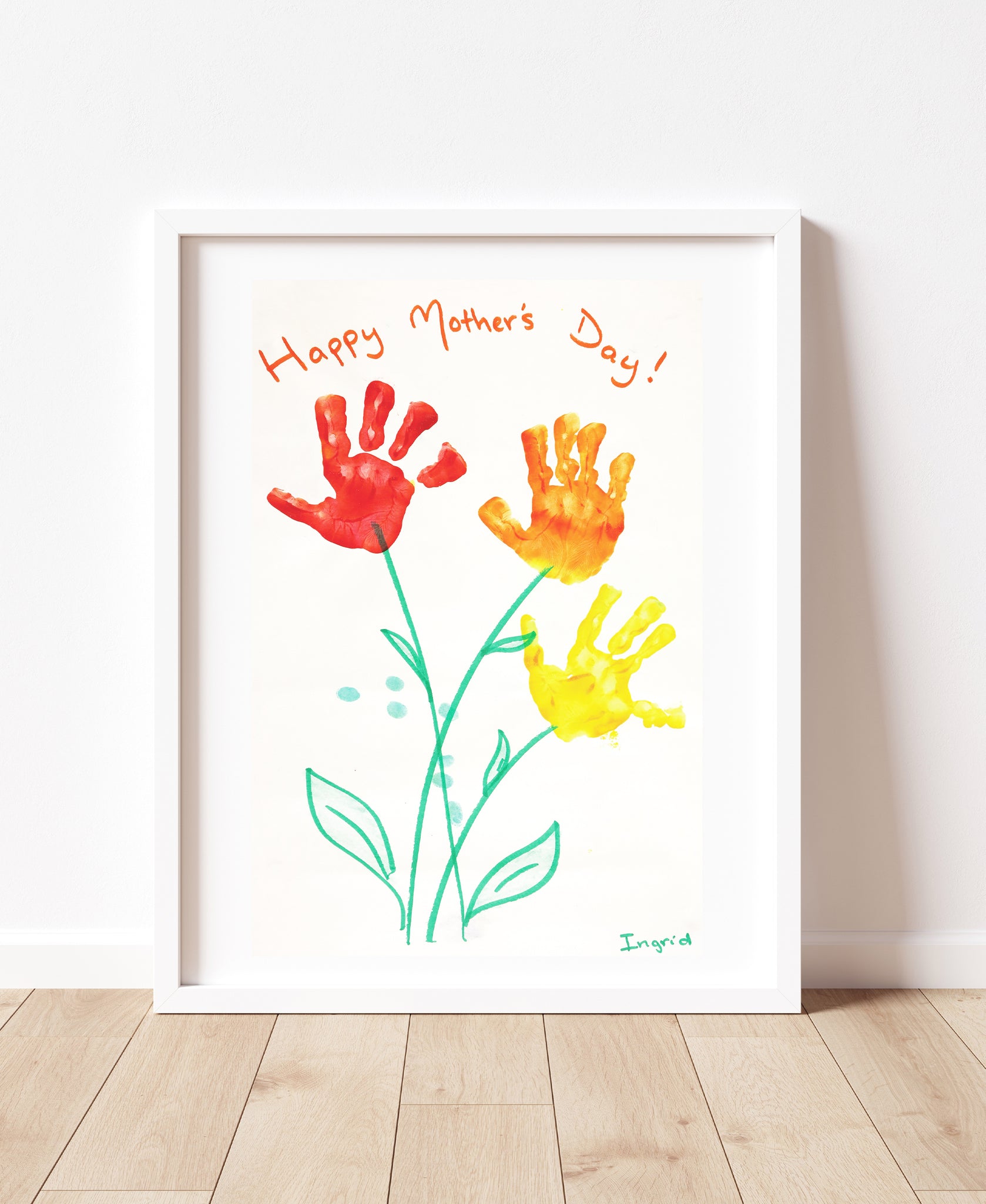
It starts innocently enough. A drawing here, a Mother's Day card there, a clay pinch pot that survived the ride home. Then you have a second child. Then maybe a third. And suddenly every counter, drawer, and closet shelf is doing double—or triple—duty as an unofficial archive.
You love your kids equally. You want to honor their work equally. But the logistics of actually doing that, while also making dinner and remembering whose library book is almost overdue, is a whole different thing.
This is your survival guide.
|
|
First: You Are Not Failing
Let's just say it out loud. The fact that you have a pile—or four piles—doesn't mean you're an unengaged parent or a disorganized person. It means you have children who are creating things, and that's actually wonderful. The overwhelm is a byproduct of abundance, not neglect.
But abundance without a system becomes chaos, and chaos becomes guilt, and guilt doesn't do anyone any good. So let's build a system.
The Multi-Child Paper Problem (And Why It's Different)
When you have one child, the sorting question is: "Is this worth keeping?" When you have multiple children, there are suddenly three questions running simultaneously:
Is this worth keeping?
Whose is this?
Have I saved something equivalent for each of them?
That third question is the one that sneaks up on you. Mom guilt has a special flavor when it involves fairness between siblings. You saved every finger painting from your oldest's kindergarten year. Your youngest's kindergarten art is in a bag somewhere. You think.
|
|

The System That Actually Works
Step 1: Give each child their own physical storage spot
This sounds obvious but most families skip it. Before you sort a single piece of paper, get each child a dedicated folder, box, or accordion file. Label it clearly. Nothing goes into the "keep" pile without going into the right child's container first.
Color-coding by child is your best friend here. One child gets blue, one gets green, one gets yellow. You'll stop asking "whose is this?" within a week.
Step 2: Sort on the same schedule for everyone
The easiest way to make sure no child gets forgotten in the memory-keeping process is to do it all at once, on the same schedule. End of each school year, same weekend, same process for every kid. Pull everything out, sort everything, file everything. One annual ritual covers everyone.
Step 3: Keep less, keep it better
With multiple kids, the volume pressure is real. The answer isn't a bigger storage solution. It's a tighter curation. Instead of keeping 90 or more pieces per child per year, aim for 20-30 truly meaningful pieces. The best drawing. The funniest written story. The self-portrait. The class photo.
Less per child means the collection stays manageable and the pieces that make it through actually get looked at someday.
Step 4: Treat keepsake books as a per-child project
The most important equity move you can make: give each child their own keepsake book. Not a family scrapbook where everyone shares space—their own book, dedicated to them, celebrating their specific artwork, their specific handwriting, their specific self-portraits over the years.
A child who can hold a book that is entirely about them—their drawings, their words, their growth—experiences something a shared family album can't replicate. You're not just organizing paper. You're telling each child, “Your story matters!”
The Fairness Question
Here's the real talk: fairness in memory-keeping doesn't mean you saved the exact same number of pieces from each child at exactly the same ages. It means each child has a meaningful record of who they were.
Your oldest might have more kindergarten keepsakes because you had more bandwidth then. Your youngest might have fewer individual pieces but a beautifully preserved book because you found a better system. Both outcomes can be loving and sufficient.
What matters is that each child, someday, can hold something that says: Someone saw you. Someone thought your work was worth saving.
|
|
When You're Starting From Behind
Maybe your youngest is in 3rd grade and you realize you haven't been as diligent as you were with your oldest. That's okay. Here's what to do:
Start now. Whatever exists from previous years, gather it. Don't spend energy on regret—spend it on creating a record from here forward.
Fill in the gaps with photos. Photos of them at school events, of projects they were proud of, of the face they made when they won the spelling bee—these belong in a keepsake book too.
|
|
The Bottom Line
Multiple kids means multiple paper piles, yes. But it also means multiple opportunities to give each child something irreplaceable: proof that their childhood was witnessed, and that it mattered.
You don't need a perfect system. You need a consistent one. And you need permission to let go of the pieces that aren't worth the storage, so the ones that are saved can actually be found and appreciated.
The pile is manageable. You've got this.
|

|